Old Masters

Between all the AI images:real old masters.

Meister Lampe is what the German fables call the hare. But Meister also means: Old Masters.

We have a thing for historical references anyway. And while the internet fills up with AI images that all look the same, we illustrate our newsletters with paintings that have a few centuries on the clock. Not out of nostalgia – but because they tell the story better.

It also fits our creed: AI is a tool. A very good one. You just have to know where to use it. And where not to.

Here we collect the paintings and explain why they fit the topic. Newest first.

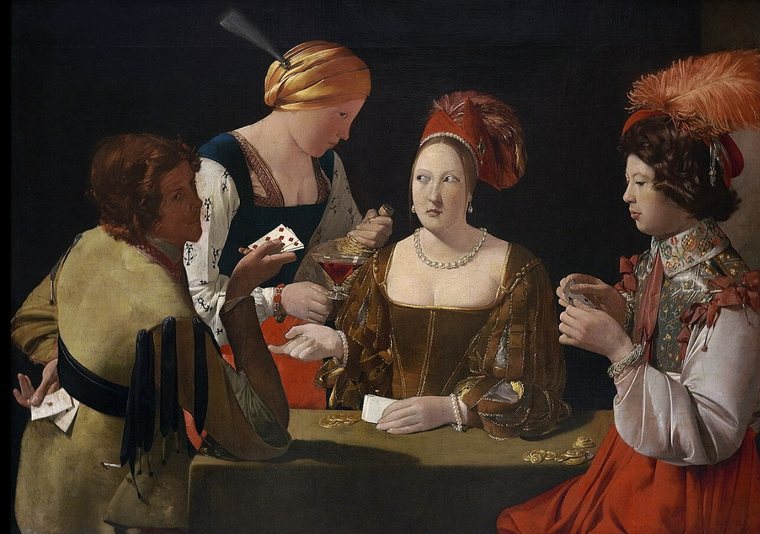
Georges de La Tour: Der Falschspieler mit dem Karo-Ass

Newsletter · 20 July 2026

Georges de La Tour: The Cheat with the Ace of Diamonds

c. 1636–1640 · oil on canvas, 106 × 146 cm · Musée du Louvre, Paris

Three cheats and one rich young man. The cardsharp on the left pulls the ace of diamonds from his belt, the courtesan in the middle gives the signal, the maid pours the wine. Only the young man on the right is looking at his cards, suspecting nothing. The game is probably “seventeen and four” – to reach 21 with two cards you need exactly one ace.

The best part is the gaze: the cheat looks out of the painting. At you. He lets you see his cards and makes you an accomplice. It is thought, by the way, that La Tour painted himself as the cheat.

Our newsletter was about A/B tests evaluated through Google Analytics. There, too, someone at the table is marking the cards – except he doesn’t look at you. He simply shows you a result and forgets to mention that 86 % of the cards are missing.
Jean-Pierre Houël: Der Sturm auf die Bastille

Newsletter · 14 July 2026

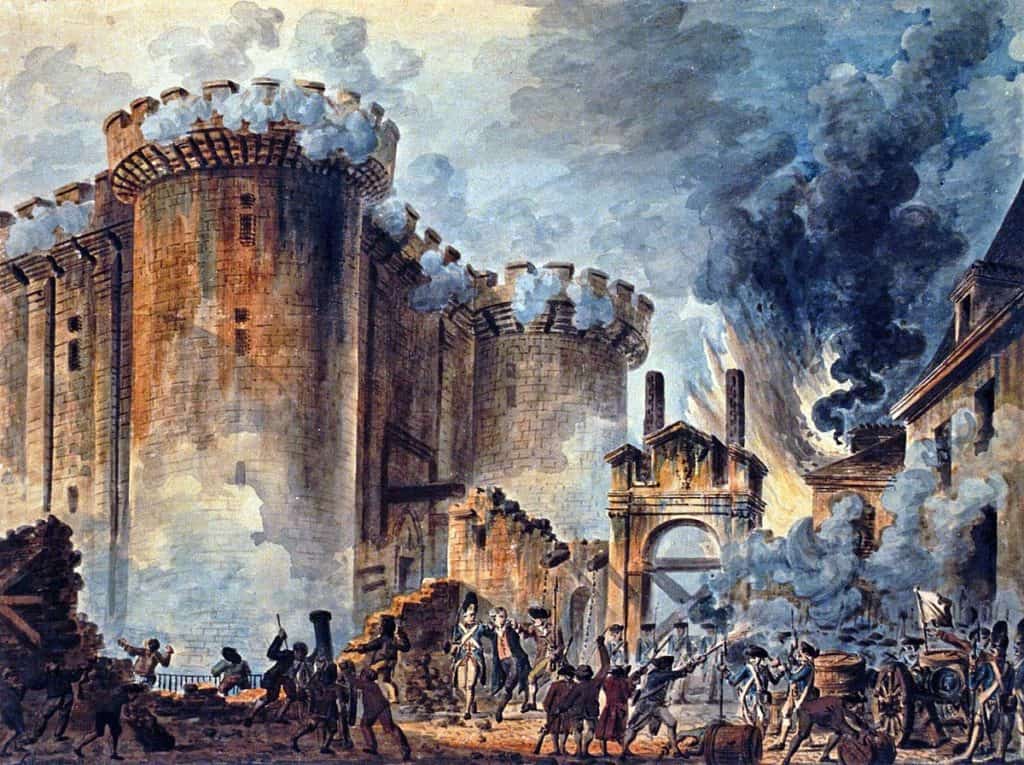
Jean-Pierre Houël: The Storming of the Bastille

1789 · watercolour/gouache, 37.8 × 50.5 cm · Bibliothèque nationale de France, Paris

The first newsletter in the new design was made on 14 July. Purely by chance the French national holiday – and the day the Bastille was stormed in 1789. The newsletter’s topic: the AI revolution. We didn’t have to look far.

Houël painted the event in the same year; he was a contemporary. And now the part rarely told: the crowd was mainly after the gunpowder. Seven prisoners were freed in the end – four forgers, two men declared insane and one aristocrat in disgrace.

Revolutions tend to be told bigger than they were. It’s much the same with AI. Which is why our newsletter was called: sure, a revolution. But what actually makes you more successful?